Dynamic Reel Shifts and Multiplier Chains: Tracing Tumble Effects Through Gonzo's Quest, Sweet Bonanza, and Gates of Olympus
Logan Schmid · Aug 19, 2026
Dynamic Reel Shifts and Multiplier Chains: Tracing Tumble Effects Through Gonzo's Quest, Sweet Bonanza, and Gates of Olympus
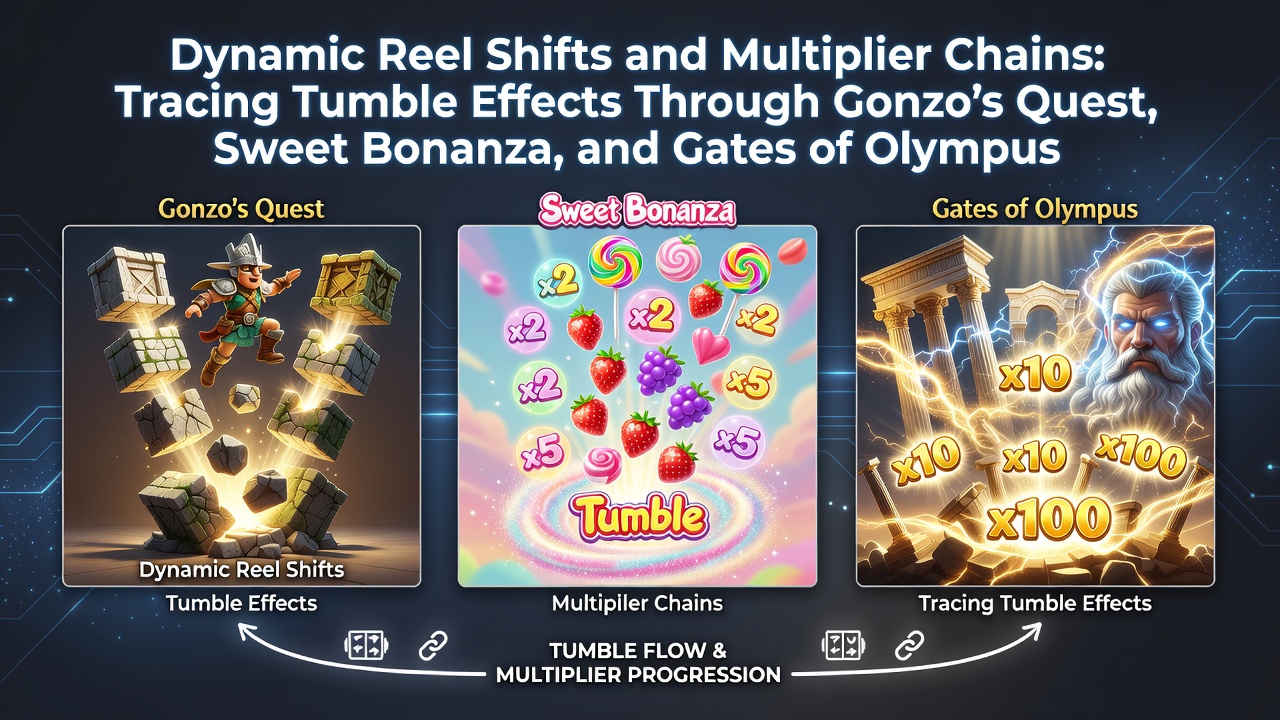
Dynamic reel shifts define a core mechanic in several established online slots where winning combinations trigger the removal of symbols followed by new ones falling into place, and this process repeats to form extended sequences. Gonzo's Quest introduced avalanche reels in 2010, Sweet Bonanza launched its tumble feature in 2019, and Gates of Olympus adopted a comparable system in 2021, each implementing multiplier chains that accumulate across successive tumbles.
Core Mechanics of Tumble Features
Reel shifts occur when symbols in a winning line disappear, allowing remaining symbols to drop and fresh ones to enter from above, while multiplier chains build when each new tumble applies an escalating multiplier to subsequent wins. In Gonzo's Quest the base multiplier starts at 1x and rises to 2x, 3x, and 5x across consecutive avalanches, whereas Sweet Bonanza applies random multipliers from 2x up to 100x on special bomb symbols that activate during tumbles. Gates of Olympus positions Zeus to award multipliers ranging from 2x to 500x at random intervals, and these values combine with the ongoing tumble sequence rather than resetting after each drop.
Researchers tracking player sessions note that the chained structure extends average spin duration because one successful combination can initiate several automatic re-spins without additional stake input. Data from the Nevada Gaming Control Board indicates that tumble-enabled titles accounted for measurable portions of total handle in regulated markets during 2025, and the pattern continued into mid-2026 as operators expanded their libraries.
Gonzo's Quest Avalanche System
Gonzo's Quest positions the avalanche on a 5x3 grid with 20 fixed paylines, and each winning avalanche replaces symbols while increasing the multiplier displayed in a dedicated meter. The progression reaches a maximum of 5x before resetting at the end of the chain, and free-fall rounds apply an extra starting multiplier of 3x that compounds further. Observers note that the meter display provides clear visual feedback, allowing players to track chain length in real time without separate pop-ups.
Sweet Bonanza Tumble and Bomb Integration
Sweet Bonanza operates on a 6x5 grid without traditional paylines, instead paying for eight or more matching symbols anywhere on the reels, and tumbles continue until no new matches form. Bomb symbols land during the sequence and carry multiplier values that multiply the total win before the next tumble begins, creating layered chains when multiple bombs appear in one drop. The feature triggers a free-spin round at scatter thresholds, and multipliers persist across those spins without reset between individual tumbles.
Gates of Olympus Multiplier Placement
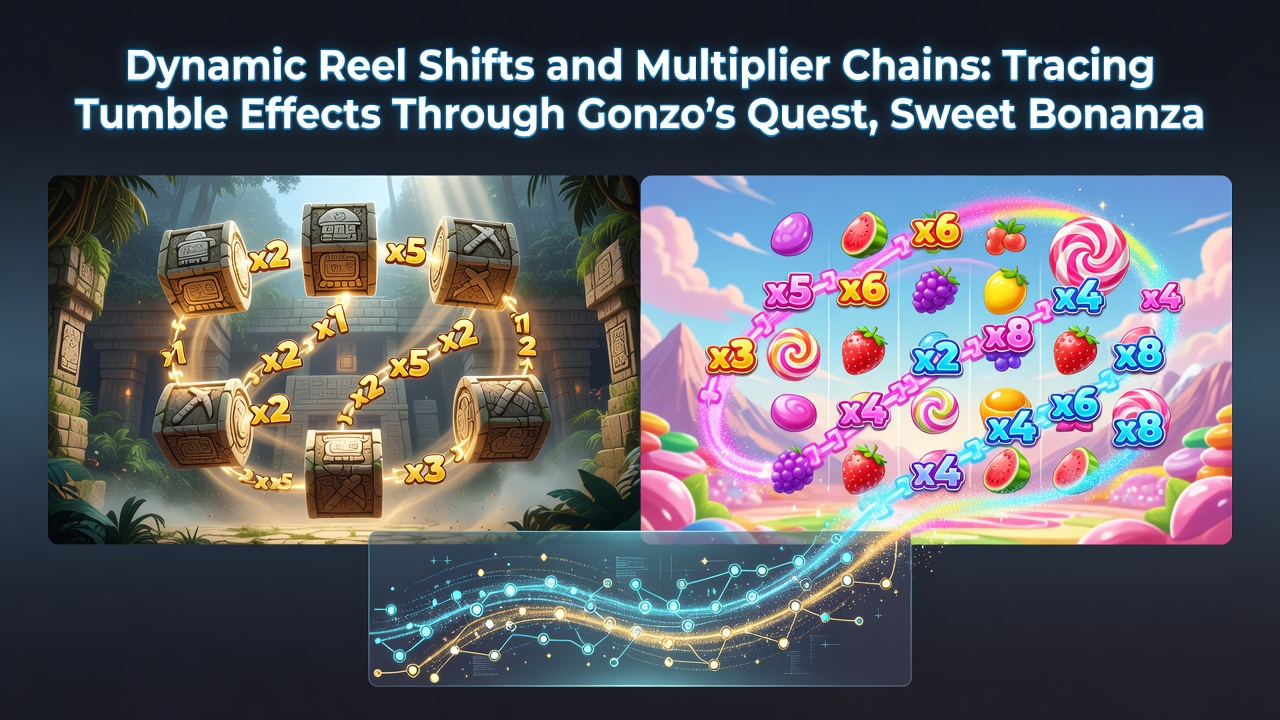
Gates of Olympus mirrors the 6x5 grid layout and scatter-pay model of Sweet Bonanza yet introduces Zeus as an active multiplier source that selects positions and applies values ranging from 2x to 500x during tumbles. Each multiplier attaches to the current win total and carries forward through subsequent drops until the chain ends, and the ante-bet option increases scatter frequency to accelerate entry into the free-spin phase. The system records chain length in background logs that operators can reference for compliance reporting.
Comparative Chain Behavior Across Titles
Side-by-side analysis reveals that Gonzo's Quest limits multiplier growth to fixed increments while Sweet Bonanza and Gates of Olympus rely on random high-value multipliers that can spike totals within a single tumble sequence. All three titles reset multipliers at the conclusion of each spin cycle, yet the visual and auditory cues differ: Gonzo's Quest uses an ascending meter, Sweet Bonanza highlights bomb icons, and Gates of Olympus displays floating multiplier orbs. Industry reports compiled by the Canadian Gaming Association show that players encounter an average of 2.8 tumbles per winning spin in these formats, with longer chains appearing at lower frequencies but contributing disproportionately to session totals.
Academic studies from the University of Sydney's gambling research unit examined session data across multiple jurisdictions and found that the presence of accumulating multipliers correlates with extended play intervals, although causation remains tied to individual risk preferences rather than the mechanic alone. Regulatory filings submitted to the Malta Gaming Authority in 2025 documented consistent implementation standards for random-number generators governing both symbol drops and multiplier selection, and those standards remained in effect through August 2026.
Technical Implementation and Compliance
Software providers encode tumble logic within the same random-number generator cycle that determines initial symbol placement, ensuring that each subsequent drop adheres to certified probability tables. External testing laboratories verify that multiplier values distribute according to published return-to-player percentages, and operators receive audit summaries that confirm compliance before market release. The shift from static reels to dynamic sequences required updates to payout engines, yet the underlying mathematics preserve the advertised RTP across both base game and bonus rounds.
Conclusion
Dynamic reel shifts combined with multiplier chains appear consistently across Gonzo's Quest, Sweet Bonanza, and Gates of Olympus, each adapting the core tumble loop to distinct visual and mathematical frameworks. The mechanics produce extended sequences through repeated symbol replacement and accumulating multipliers, and regulatory data from multiple regions confirm their stable integration into licensed markets as of 2026. Players encounter these features through standardized grid layouts and pay systems that emphasize chain continuation rather than single-spin resolution.